Vision Boards for Beginners: How to Create One That Works
Vision Boards for Beginners: How to Create One That Works
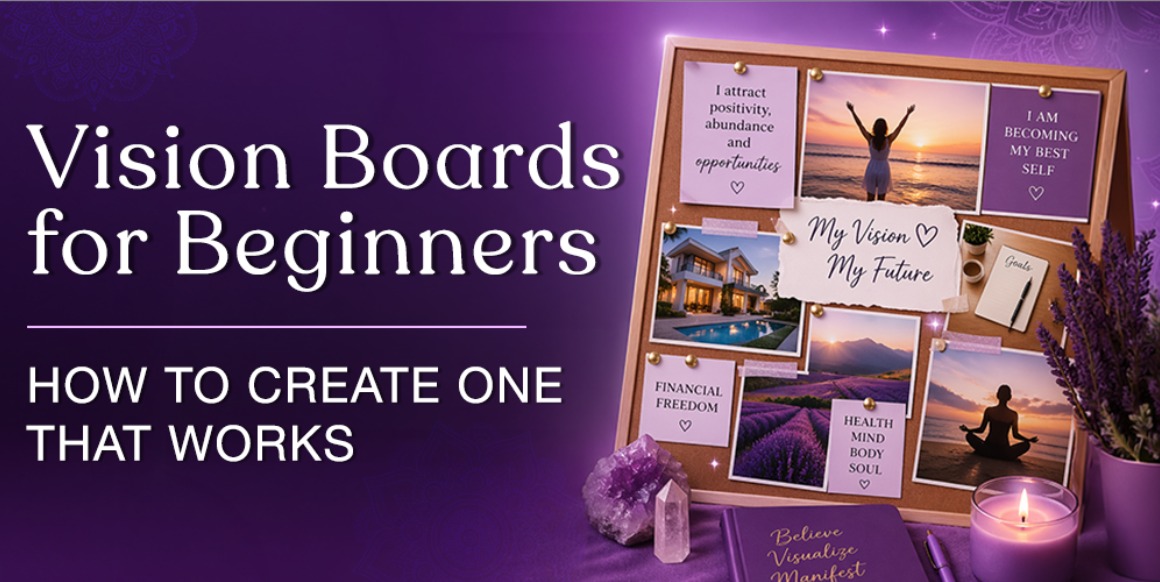
A vision board is one of the most practical tools beginners can use to apply the law of attraction in daily life. It helps transform abstract goals into a visible mental direction. Instead of thinking about your desires occasionally, a vision board keeps them present in your awareness every day.
However, many people create vision boards and later feel disappointed because nothing seems to change. The problem is rarely the tool itself. The problem is how the tool is used.
A vision board works when it strengthens clarity, emotional connection, and consistency. When these three elements come together, the board becomes more than a collection of images. It becomes a daily alignment exercise that supports your manifestation journey and your overall personal development.
What a Vision Board Actually Does
A vision board is not meant to magically produce results. Its purpose is to train your attention.
Your mind constantly responds to what it sees repeatedly. When you place meaningful images and intentions in front of yourself every day, your brain begins to treat those outcomes as familiar and achievable rather than distant and uncertain.
This shift reduces doubt and strengthens confidence.
For beginners working with an online life coach or spiritual life coach, vision boards are often used as clarity tools. They help define direction before action begins.
Without clarity, effort becomes scattered. With clarity, effort becomes purposeful.
Why Most Vision Boards Do Not Work
Many beginners create vision boards once and then forget about them. Others fill their boards with random images that look attractive but do not create emotional connection.
A vision board becomes effective only when it reflects intentions that genuinely matter to you.
If your board contains goals that come from comparison, pressure, or social expectations, your subconscious mind will not respond strongly to them.
A working vision board must feel personal and meaningful.
It should represent the life you are ready to grow into, not the life someone else expects from you.
Step 1: Get Clear About What You Want
Before collecting images, take time to define your intentions.
Ask yourself simple but important questions.
Which areas of life do I want to improve?
What kind of experiences do I want more of?
What changes will make my daily life better?
This stage is especially useful for people exploring direction through career counselling online, because clarity about professional goals helps create stronger mental alignment.
When your goals are clear, the images you choose will feel natural rather than forced.
Step 2: Choose Images That Create Emotional Connection
A vision board is not about decoration. It is about imagination.
Each image should represent a feeling as much as an outcome.
For example, if your goal is better health, include images that represent strength, balance, and energy rather than only appearance-based results. This approach strengthens the emotional side of health law of attraction, which plays an important role in long-term transformation.
If your intention is emotional recovery, include images that reflect calmness, stability, and confidence. Many people working on holistic healing for depression and anxiety find that visual reminders of peace and progress help maintain consistency.
Your board should remind you not only what you want, but also how you want to feel.
Step 3: Focus on One Clear Direction at a Time
Beginners often make the mistake of adding too many goals to one vision board.
When everything appears equally important, the mind struggles to prioritize.
Instead, begin with one or two key intentions. This helps your imagination stay focused and consistent.
As your clarity improves, you can expand the board gradually.
People who work with a personal development coach near me often start with one area of improvement before moving to the next. This approach builds confidence through visible progress.
Step 4: Place Your Vision Board Where You Can See It Daily
Visibility matters more than creativity.
Your vision board should be placed somewhere you naturally look every day. This could be near your workspace, beside your study area, or close to where you begin your morning routine.
The purpose is repetition.
Repeated exposure strengthens familiarity. Familiarity reduces resistance. Reduced resistance supports manifestation.
When your mind sees the same intention regularly, it begins to accept it as part of your future rather than something distant.
Step 5: Spend a Few Minutes With Your Vision Board Each Day
Creating a vision board is only the first step. Daily interaction makes it effective.
Spend a few minutes looking at the board calmly. Imagine the experiences shown in the images as already part of your life.
For example, if one of your intentions is to attract love with law of attraction, focus on the emotional experience of trust, companionship, and connection rather than only the idea of a relationship.
Similarly, if your intention involves law of attraction to heal someone, visualize that person experiencing comfort, strength, and improvement rather than focusing on illness.
This emotional engagement strengthens the connection between imagination and reality.
Step 6: Combine Visualization With Action
A vision board is not meant to replace effort. It is meant to guide effort.
When your intentions are visible every day, your decisions begin to align with them naturally. You start noticing opportunities that match your direction. You become more aware of habits that support your goals.
For example, someone focusing on career growth may begin exploring learning opportunities after regularly seeing their professional goals represented visually. This connection between imagination and action is what makes vision boards effective.
Support from an online life coach or structured mentoring can help translate these visual intentions into practical steps.
Step 7: Update Your Vision Board as You Grow
Your goals will change over time. Your vision board should reflect that change.
As you achieve certain milestones, replace those images with new intentions. This keeps your board relevant and motivating.
Updating your board also reinforces progress. It reminds you that change is happening, even if it feels gradual.
This process strengthens your belief in your ability to create results through consistent alignment.
Common Mistakes Beginners Should Avoid
Some mistakes reduce the effectiveness of vision boards.
One common mistake is creating the board and then ignoring it. Another is choosing images based only on appearance rather than emotional meaning.
Some beginners also expect immediate results without daily engagement.
A vision board works best when it becomes part of your routine rather than a one-time activity.
Consistency creates familiarity. Familiarity strengthens belief. Belief supports manifestation.
How Vision Boards Support Long-Term Manifestation
Over time, a vision board becomes more than a visual reminder.
It becomes a reflection of your direction.
As your imagination becomes clearer, your actions become more intentional. Decisions begin to align with your priorities. Opportunities become easier to recognize.
This is why vision boards are often used as part of structured personal development systems. They help connect intention with daily behaviour in a practical way.
When used correctly, a vision board does not just display your goals. It helps you move toward them with clarity and confidence.
Still unsure where to start your manifestation journey?
At JustImagine Wowline, we help you gain clarity, align your mindset, and take the first step toward the life you truly desire. Whether you're feeling stuck, overwhelmed, or seeking direction, our manifestation experts are here to guide you.
Ready to transform your life?
Start your manifestation journey with WOWLINE today and achieve the clarity you need to succeed.
Experience the WOWLine